


Felt acoustic ceilings have become increasingly popular in modern architectural designs due to their excellent sound - absorption properties, aesthetic appeal, and ease of installation. As a Felt Acoustic Ceiling supplier, I am often asked about the standard sizes available in the market. In this blog, I will delve into the various standard sizes of felt acoustic ceilings, their applications, and how they can enhance the acoustic environment of different spaces.
Commonly Available Sizes
The standard sizes of felt acoustic ceilings can vary depending on the manufacturing process, customer demand, and design requirements. Generally, these ceilings come in a range of rectangular and square shapes.
1. Square Sizes
- One of the most common square sizes is 600mm x 600mm. This size is widely used in commercial buildings such as offices, conference rooms, and retail stores. The 600mm x 600mm panels are relatively easy to handle during installation, and they can be arranged in a grid pattern to create a clean and uniform look. For example, in a large open - plan office, a ceiling made up of 600mm x 600mm felt acoustic panels can effectively reduce echo and background noise, creating a more productive work environment. [1]
- Another popular square size is 300mm x 300mm. These smaller panels are often used in areas where a more detailed or decorative ceiling design is desired. They can be combined with larger panels or used on their own to create interesting patterns. For instance, in a high - end restaurant or a lounge area, 300mm x 300mm felt acoustic panels can be arranged in a herringbone or mosaic pattern to add a touch of elegance while improving acoustics.
2. Rectangular Sizes
- A common rectangular size is 1200mm x 600mm. These panels are suitable for long and narrow spaces such as corridors, gallery spaces, or auditorium aisles. The longer dimension can contribute to a more streamlined appearance along the length of the space. In a museum corridor, for example, 1200mm x 600mm felt acoustic ceilings can help to manage the noise generated by visitors while maintaining a visually appealing aesthetic.
- Panels with dimensions of 1800mm x 600mm are also available. These larger rectangular panels are useful for covering large areas quickly with fewer seams. They are often installed in industrial or large - scale commercial buildings where efficiency of installation and large - area coverage are priorities.
Custom Sizes
In addition to the standard sizes, we also offer custom - sized felt acoustic ceilings. Many projects have unique design requirements that cannot be met with off - the - shelf sizes. For example, a modern art gallery may have irregularly - shaped rooms where custom - cut felt acoustic panels are needed to fit the space precisely. Our team of experts works closely with architects, designers, and contractors to create custom - sized panels that meet the specific needs of each project. This flexibility is one of the advantages of working with a reliable Felt Acoustic Ceiling supplier like us.
Applications for Different Sizes
1. Office Spaces
In office spaces, 600mm x 600mm and 1200mm x 600mm panels are commonly used. The 600mm x 600mm panels are ideal for creating modular ceiling systems that can be easily integrated with other building services such as lighting and ventilation. The larger 1200mm x 600mm panels can be used in open - plan areas to provide quick and effective noise control. By reducing noise levels, these felt acoustic ceilings help to improve communication, concentration, and overall employee productivity.
2. Educational Institutions
Schools and universities benefit from the use of various sizes of felt acoustic ceilings. In classrooms, 600mm x 600mm panels are often used to create a quiet learning environment. Smaller 300mm x 300mm panels can be used in art rooms or music studios to add a decorative touch while enhancing acoustics. In large auditoriums, larger rectangular panels such as 1800mm x 600mm can cover large areas and effectively control sound reflections.
3. Hospitality Industry
Hotels, restaurants, and bars use felt acoustic ceilings to create a comfortable and inviting atmosphere. Smaller square panels are often used in reception areas and small dining rooms to create a cozy feel. In large ballrooms or event spaces, larger panels are used to cover vast areas and manage the noise generated by large gatherings. [2]
Comparison with Other Ceiling Types and Related Products
Felt acoustic ceilings have some advantages when compared to other ceiling types. For example, compared to mineral fiber ceilings, felt ceilings are often more aesthetically pleasing as they can be dyed in a variety of colors and have a softer, more natural look.
When it comes to related products such as Hanging Soundproofing Clouds and Suspended Acoustic Clouds, they can be used in combination with felt acoustic ceilings. Hanging soundproofing clouds are useful for targeting specific areas where sound control is needed, such as under high ceilings or in spaces with irregular acoustic profiles. Suspended acoustic clouds can be used to create unique visual effects while also improving acoustics. Together with felt acoustic ceilings, they can form a comprehensive acoustic solution for a given space.

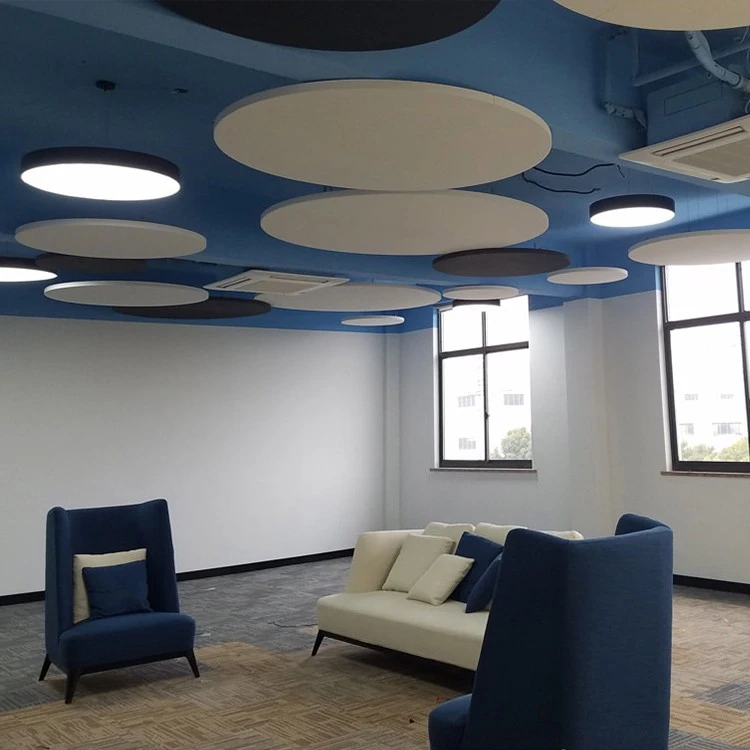
Factors to Consider in Size Selection
When choosing the size of felt acoustic ceilings for a project, several factors need to be considered.
1. Space Dimensions
The size of the room plays a crucial role in determining the appropriate panel size. In a small room, using large panels may make the space feel cramped, while in a large space, small panels may result in too many seams and a less uniform appearance.
2. Aesthetic Goals
If the design calls for a particular pattern or visual effect, the panel size will need to be selected accordingly. For a more minimalist look, larger panels may be preferred, while for a more detailed or ornate design, smaller panels can be used.
3. Installation Requirements
Ease of installation is another important factor. Larger panels may require more manpower and specialized equipment to install, while smaller panels can be more easily handled by a single installer.
Conclusion
In conclusion, the standard sizes of felt acoustic ceilings offer a wide range of options to meet the diverse needs of different projects. From square panels of 300mm x 300mm to rectangular panels of 1800mm x 600mm, each size has its own advantages and applications. Whether you are an architect, a designer, or a contractor working on a commercial, educational, or hospitality project, choosing the right size of felt acoustic ceiling is essential for achieving the desired acoustic and aesthetic results.
As a Felt Acoustic Ceiling supplier, we are committed to providing high - quality products in both standard and custom sizes. If you have a project in mind and need more information about our felt acoustic ceilings, or if you want to discuss the best size options for your space, we encourage you to reach out to us for a detailed consultation. We look forward to working with you to create the perfect acoustic solution for your project.
References
[1] Smith, J. (2018). Acoustic Design in Commercial Buildings. Architectural Press.
[2] Johnson, A. (2020). Hospitality Interior Design: Acoustic Considerations. Interior Design Journal.


