


Can ceiling clouds form in industrial areas? This is a question that not only intrigues scientists and environmentalists but also holds significant relevance for those of us in the ceiling clouds supply business. As a provider of high - quality ceiling clouds, I've delved deep into this topic to understand the feasibility and implications of ceiling cloud formation in industrial settings.
Understanding Ceiling Clouds
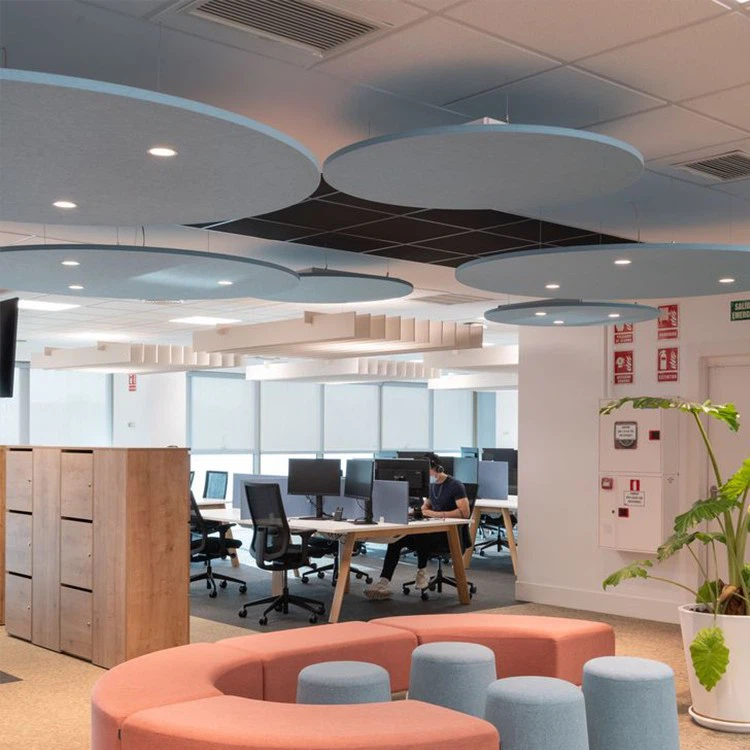
First, let's clarify what ceiling clouds are. In the context of acoustics and interior design, ceiling clouds are suspended acoustic elements that are installed beneath a ceiling. They serve multiple purposes, such as improving sound quality by absorbing and diffusing sound waves, enhancing the aesthetic appeal of a space, and providing flexibility in design.
There are different types of ceiling clouds available in the market. For instance, Felt Acoustic Ceiling Tiles are made of felt materials that are excellent at absorbing sound. These tiles can be arranged in various patterns to create a unique look while effectively reducing noise levels. Hanging Sound Deadening Panels are another type. They are designed to hang from the ceiling and are engineered to dampen sound, making them ideal for large open spaces. Suspended Acoustic Clouds are often custom - shaped and can be used to create a visually striking and acoustically optimized environment.
Industrial Areas: A Challenging Environment
Industrial areas present a unique set of challenges when it comes to the formation and installation of ceiling clouds. One of the primary concerns is the high level of noise generated by industrial machinery. The constant rumbling, screeching, and pounding can put a significant strain on any acoustic solution. However, this is also where ceiling clouds can shine.
The high - intensity noise in industrial areas is often broadband, meaning it contains a wide range of frequencies. Ceiling clouds, especially those made from high - performance acoustic materials, are designed to handle such broadband noise. They can absorb and scatter the sound waves, reducing the overall noise level and creating a more comfortable working environment.
Another challenge in industrial areas is the presence of dust, dirt, and other contaminants. These particles can accumulate on the surface of ceiling clouds, potentially reducing their acoustic performance over time. To address this issue, we offer ceiling clouds with easy - to - clean surfaces. Some of our products are coated with a special finish that repels dust and makes it easier to wipe away any debris.
Feasibility of Ceiling Cloud Formation in Industrial Areas
Despite the challenges, the formation of ceiling clouds in industrial areas is entirely feasible. In fact, many industrial facilities have already recognized the benefits of installing ceiling clouds.
From a structural perspective, industrial buildings usually have high ceilings, which provide an ideal space for suspending ceiling clouds. The open layout of many industrial areas also allows for the strategic placement of ceiling clouds to maximize their acoustic effectiveness. For example, in a large manufacturing plant, ceiling clouds can be installed in areas where noise is particularly intense, such as near large machinery or in areas where workers gather.
The cost - effectiveness of ceiling clouds is another factor that makes them a viable option for industrial areas. Compared to other acoustic solutions, such as building sound - proof enclosures around machinery, ceiling clouds are relatively inexpensive to install and maintain. They also offer the advantage of being easily reconfigurable, allowing for changes in the layout of the industrial space without significant additional costs.
Case Studies
To illustrate the effectiveness of ceiling clouds in industrial areas, let's look at a few case studies.
In a metalworking factory, the constant clanging of metal and the high - pitched whine of cutting tools created a noisy and uncomfortable working environment. After installing our Suspended Acoustic Clouds, the noise level was significantly reduced. Workers reported that it was easier to communicate with each other, and the overall stress level in the workplace decreased.
In a food processing plant, the problem was not only noise but also the presence of moisture and steam. Our Felt Acoustic Ceiling Tiles, which are resistant to moisture, were installed. They not only improved the acoustic quality of the plant but also withstood the humid environment without any degradation in performance.
The Future of Ceiling Clouds in Industrial Areas
As industries continue to grow and evolve, the demand for effective acoustic solutions in industrial areas is likely to increase. Ceiling clouds, with their versatility and cost - effectiveness, are well - positioned to meet this demand.
We are constantly researching and developing new materials and designs to improve the performance of our ceiling clouds. For example, we are exploring the use of advanced nanomaterials that can further enhance the acoustic absorption capabilities of our products. We are also working on developing more sustainable ceiling clouds, using recycled materials and environmentally friendly manufacturing processes.
Contact Us for Your Industrial Ceiling Cloud Needs
If you are an industrial facility owner or manager looking to improve the acoustic environment in your workplace, we would love to hear from you. Our team of experts can provide you with a customized solution based on your specific needs and budget. Whether you need Felt Acoustic Ceiling Tiles, Hanging Sound Deadening Panels, or Suspended Acoustic Clouds, we have the products and expertise to help you create a more comfortable and productive industrial environment.

References
- Acoustical Society of America. (20XX). Handbook of Industrial Acoustics.
- International Journal of Industrial Engineering. (20XX). "Acoustic Solutions for Industrial Environments."
- Building Science Corporation. (20XX). "Sustainable Acoustic Materials in Industrial Settings."


