


As a supplier of Felt Acoustic Ceiling products, I often encounter various questions from customers, and one that comes up quite frequently is whether a felt acoustic ceiling can be installed on an uneven surface. This is a crucial query as many older buildings or spaces with unique architectural features have uneven ceilings. In this blog, I'll delve into this topic, exploring the possibilities, challenges, and solutions related to installing felt acoustic ceilings on uneven surfaces.
Understanding Felt Acoustic Ceilings
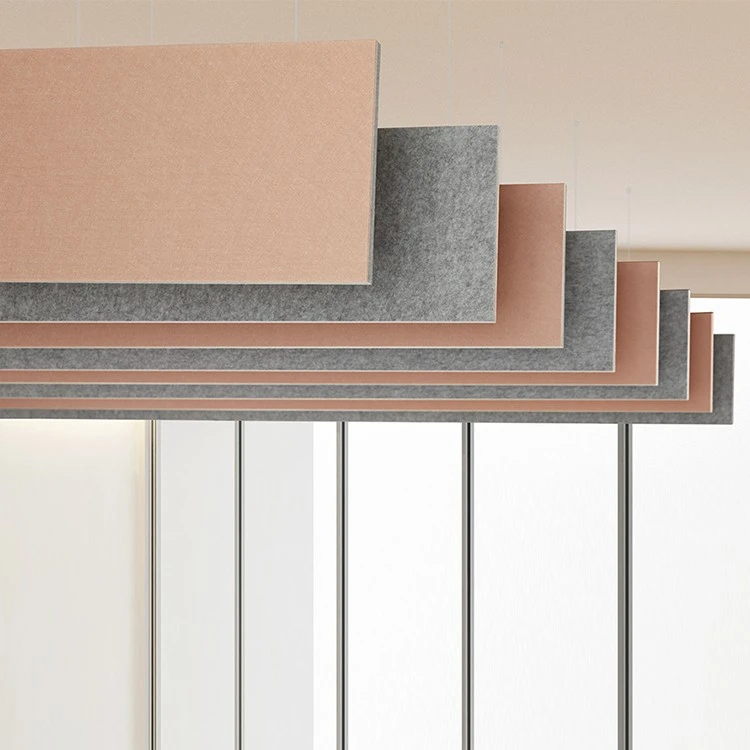
Before we discuss the installation on uneven surfaces, let's briefly understand what felt acoustic ceilings are. Felt acoustic ceilings are made from high - quality felt materials that are designed to absorb sound waves, reducing echo and noise in a room. They come in various forms, such as Felt Acoustic Ceiling Tiles, Hanging Sound Deadening Panels, and Suspended Acoustic Clouds. These products not only enhance the acoustic performance of a space but also add an aesthetic touch with their soft, warm appearance.
Challenges of Installing on Uneven Surfaces
Installing a felt acoustic ceiling on an uneven surface presents several challenges. Firstly, the unevenness can cause gaps between the ceiling tiles or panels. These gaps can compromise the acoustic performance of the ceiling as sound waves can easily pass through them. For example, in a large conference room, if there are significant gaps due to an uneven surface, the sound absorption efficiency may drop, leading to poor speech intelligibility and increased background noise.
Secondly, the visual appeal of the ceiling can be affected. Uneven installation may result in a lumpy or wavy appearance, which is not only unappealing but can also give an impression of poor workmanship. In a commercial space like a restaurant or a hotel lobby, where aesthetics are as important as functionality, this can be a major drawback.
Another challenge is the structural integrity of the installation. Uneven surfaces may put uneven stress on the ceiling tiles or panels, increasing the risk of damage over time. For instance, if a tile is forced to fit on a surface with a large bump, it may crack or warp, reducing its lifespan.
Possibilities and Solutions
Despite the challenges, it is indeed possible to install a felt acoustic ceiling on an uneven surface. Here are some approaches that can be employed:
Surface Preparation
One of the most effective ways is to prepare the surface before installation. This can involve filling in the low areas with a suitable filler material and sanding down the high points. For minor unevenness, a self - leveling compound can be used to create a smooth base. However, this method may not be suitable for large - scale unevenness or in cases where the ceiling structure does not allow for significant alterations.
Suspended Installation
Using a suspended ceiling system is a popular solution for uneven surfaces. Suspended acoustic clouds or hanging sound deadening panels can be installed from a grid system that is leveled independently of the existing ceiling. This way, the felt acoustic elements are not directly attached to the uneven surface, eliminating the problems associated with surface irregularities. The grid system can be adjusted to ensure a perfectly level installation, providing both good acoustic performance and a clean, professional look.
Custom - Cut Tiles
In some cases, custom - cut felt acoustic ceiling tiles can be used. By carefully measuring the uneven surface, the tiles can be cut to fit the contours of the ceiling. This requires a high level of precision and expertise but can result in a seamless installation. However, this method can be more time - consuming and expensive compared to standard tile installation.
Case Studies
Let's take a look at some real - world examples to illustrate the effectiveness of these solutions.
In a historic theater with an uneven plaster ceiling, the management wanted to improve the acoustic quality without altering the original ceiling structure significantly. We recommended a suspended acoustic cloud system. The grid was installed at a level height, and the acoustic clouds were hung from it. This not only improved the sound absorption in the theater but also added a modern and stylish element to the space.
In a small recording studio with a slightly uneven concrete ceiling, we used custom - cut felt acoustic ceiling tiles. After careful measurement and cutting, the tiles were installed directly on the ceiling. The result was a well - fitting ceiling that provided excellent sound insulation, allowing for high - quality audio recording.
Considerations for Installation
When installing a felt acoustic ceiling on an uneven surface, there are several factors to consider.
Budget
Surface preparation and custom - cut installation can be more expensive than standard installation methods. A suspended ceiling system may also require additional materials and labor. It's important to discuss the budget with the customer upfront and provide them with a detailed cost breakdown.
Timeframe
Some installation methods, such as custom - cut tile installation, can take longer. This may be a concern for customers who need the project completed quickly. A suspended ceiling system, on the other hand, can often be installed relatively quickly, minimizing disruption to the space.
Acoustic Requirements
The specific acoustic requirements of the space should also be taken into account. For example, a concert hall will have much higher acoustic standards than an office lobby. The installation method should be chosen based on the ability to meet these requirements.
Conclusion
In conclusion, while installing a felt acoustic ceiling on an uneven surface presents challenges, it is definitely achievable with the right approach. Surface preparation, suspended installation, and custom - cut tiles are all viable solutions that can ensure both good acoustic performance and an aesthetically pleasing result.

If you are considering installing a felt acoustic ceiling in a space with an uneven surface, or if you have any other questions about our Felt Acoustic Ceiling products, I encourage you to reach out to us. Our team of experts is ready to assist you in finding the best solution for your specific needs. Whether it's a small home studio or a large commercial venue, we have the knowledge and experience to deliver a high - quality installation. Contact us today to start the conversation about your acoustic ceiling project.
References
- Acoustic Design Handbook, John Wiley & Sons
- Ceiling Installation Guide, Building Materials Association


