


Hey there! I'm a supplier of ceiling clouds, and I've been getting a bunch of questions lately about the relationship between ceiling clouds and cloud seeding. At first glance, they might seem like they're from two completely different worlds, but stick with me, and I'll break it down for you.
Let's start with a quick rundown of what each of these things is. Ceiling clouds, in the context of what I deal with, are these awesome acoustic elements that you can hang from your ceiling. They're super handy for controlling sound in all sorts of spaces, from offices to concert halls. You can check out some cool options like Suspended Acoustic Clouds, Felt Acoustic Ceiling, and Felt Acoustic Ceiling Tiles. They come in different shapes, sizes, and materials, and they do an amazing job of reducing echo and noise levels.
On the other hand, cloud seeding is a weather - modification technique. It involves adding substances like silver iodide or dry ice to clouds to try and encourage precipitation. Scientists have been doing this for decades in an attempt to increase rainfall in drought - prone areas or to reduce the severity of hail storms.
Now, the obvious question is, how on earth are these two things related? Well, the short answer is that they're mostly related in name only. The term "cloud" in "ceiling clouds" and "cloud seeding" is just a coincidence. But let's dig a little deeper and see if there are any hidden connections.
One way they could be related is in the concept of manipulation. In cloud seeding, we're trying to manipulate the natural process of cloud formation and precipitation. With ceiling clouds, we're manipulating the acoustics of a space. We're taking a raw environment with all its natural sound reflections and echoes and shaping it into something more comfortable and functional. In both cases, we're using technology and materials to achieve a specific goal.
Another similarity is in the idea of distribution. When we seed clouds, we're distributing substances throughout a large volume of air in the cloud. With ceiling clouds, we distribute them strategically across a ceiling to achieve uniform sound absorption. The placement of ceiling clouds is just as important as the distribution of seeding agents in a cloud. If you don't place your ceiling clouds correctly, you won't get the best acoustic results, just like if you don't distribute the seeding agents properly, you won't get the desired weather effects.
But that's about where the similarities end. The materials and processes involved are completely different. Cloud seeding uses chemicals and aircraft or ground - based generators to disperse those chemicals. Ceiling clouds are made from materials like fiberglass, felt, or other acoustic foams, and they're installed using cables or brackets.
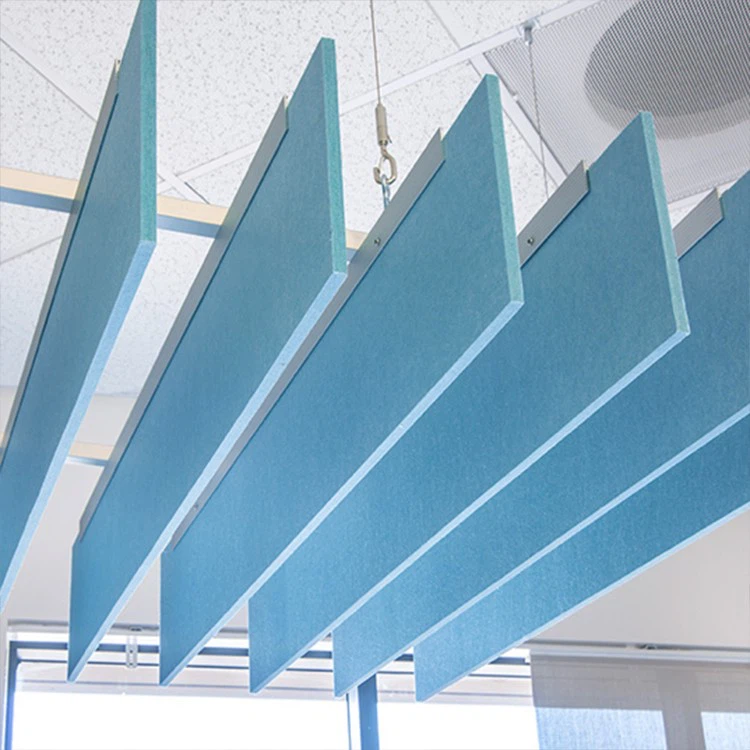

In terms of the impact, cloud seeding has a large - scale environmental impact. It can potentially change the weather patterns in a region, which can have far - reaching consequences for agriculture, water resources, and even the climate. Ceiling clouds, on the other hand, have a very localized impact. They affect the sound quality within a single room or a small group of rooms.
Let's talk a bit more about the technology behind ceiling clouds. As I mentioned earlier, we have a variety of materials to choose from. Fiberglass is a popular choice because it's lightweight and has good sound - absorbing properties. Felt is another great option. It gives a more natural look and can be very effective at reducing high - frequency sounds.
The design of ceiling clouds is also crucial. We can make them in different shapes, such as rectangles, circles, or even custom - made shapes to fit the aesthetic of a particular space. The shape affects how the sound waves interact with the cloud. For example, a circular cloud might disperse sound waves more evenly than a rectangular one in some cases.
Now, let's get back to cloud seeding for a moment. There's still a lot of debate in the scientific community about how effective it really is. Some studies show that it can increase rainfall by a certain percentage, while others are more skeptical. The success of cloud seeding depends on a lot of factors, like the type of cloud, the atmospheric conditions, and the amount of seeding agent used.
In the world of ceiling clouds, we don't have the same level of uncertainty. We know that if we use the right materials and design, and install them correctly, we can achieve significant improvements in acoustic quality. We can measure the sound absorption coefficient and other acoustic parameters to ensure that the ceiling clouds are doing their job.
If you're thinking about using ceiling clouds in your space, there are a few things to consider. First, you need to assess the size and shape of the room. A large, open - plan office will require a different approach than a small recording studio. You also need to think about the existing noise sources in the room. Is it traffic noise from outside? Or is it the chatter of people in the room?
Once you've done your assessment, you can start looking at different types of ceiling clouds. You might want to go for a more industrial - looking fiberglass cloud if you're in a modern office, or a felt cloud if you're in a more creative space like an art gallery.
I hope this blog post has given you a better understanding of the relationship between ceiling clouds and cloud seeding. Even though they're mostly different, it's interesting to see the few similarities they share.
If you're interested in purchasing ceiling clouds for your project, I'd love to have a chat with you. Whether you're an architect, an interior designer, or a building owner, we can work together to find the best solution for your acoustic needs. Just reach out, and we can start discussing your requirements.
References:
- Textbooks on acoustics and acoustic materials
- Scientific research papers on cloud seeding
- Industry reports on the use of ceiling clouds in different spaces


